
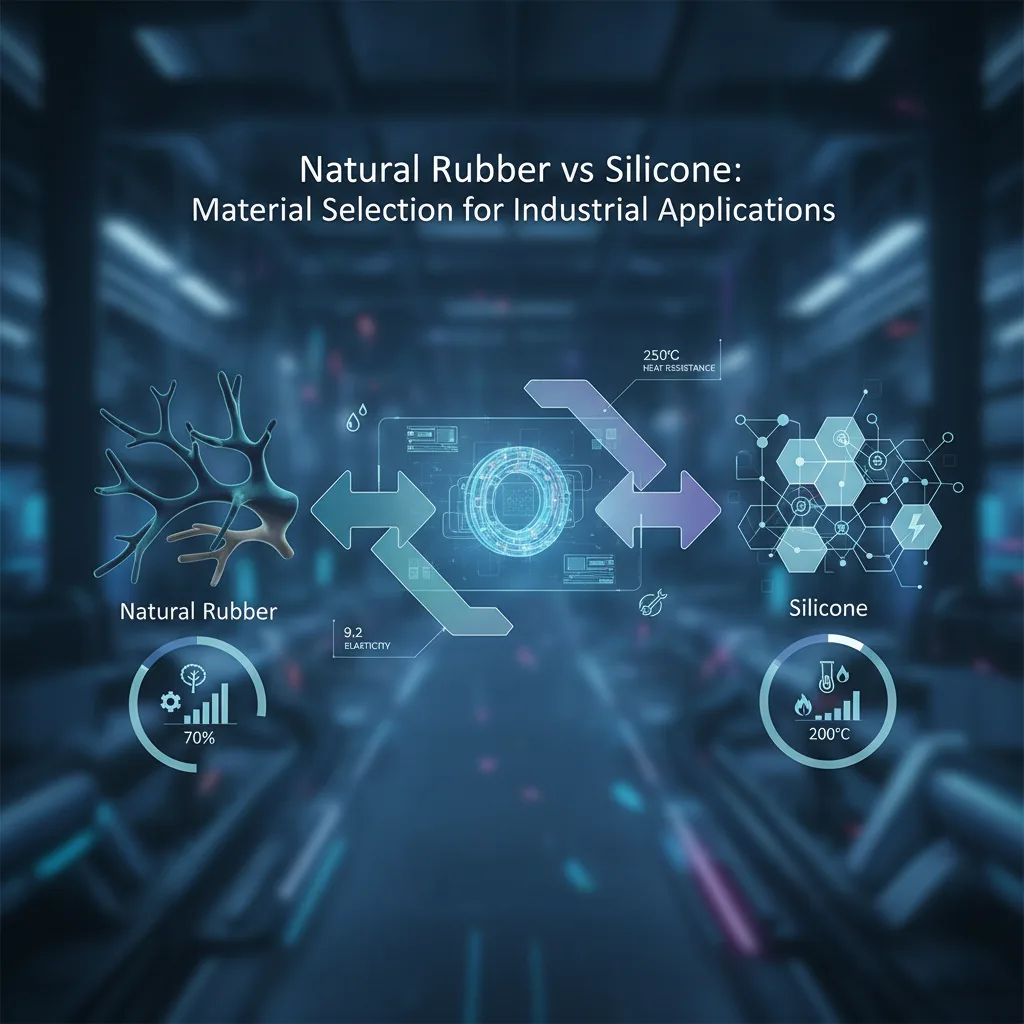
Choosing between natural rubber and silicone depends on the specific environmental demands of your application. Natural rubber provides superior mechanical strength and tear resistance for high-stress, low-temperature tasks. Silicone is the preferred choice for extreme temperature fluctuations, chemical stability, and long-term exposure to outdoor elements.
Understanding the Chemical Differences
Natural rubber is an organic polymer harvested from the sap of the Hevea brasiliensis tree. Its molecular structure provides high elasticity and excellent resistance to fatigue, making it ideal for heavy-duty mechanical parts.
Silicone is a synthetic elastomer with a backbone of silicon and oxygen atoms. This unique atomic structure makes it inherently more stable than carbon-based rubbers. While natural rubber may degrade when exposed to ozone, UV light, or extreme heat, silicone maintains its physical properties across a much wider temperature range.
When to Select Natural Rubber
Natural rubber is often the default choice for applications requiring high tensile strength and durability under physical impact. It performs exceptionally well in environments where the material must withstand constant stretching or compression without permanent deformation.
- High Abrasion Resistance: It is highly effective in applications involving heavy friction or mechanical wear.
- Low-Temperature Flexibility: Natural rubber maintains its elasticity in cold environments where other synthetic materials might become brittle.
- Cost-Effectiveness: For standard industrial components that do not require specialized thermal or chemical resistance, natural rubber often provides a more economical solution.
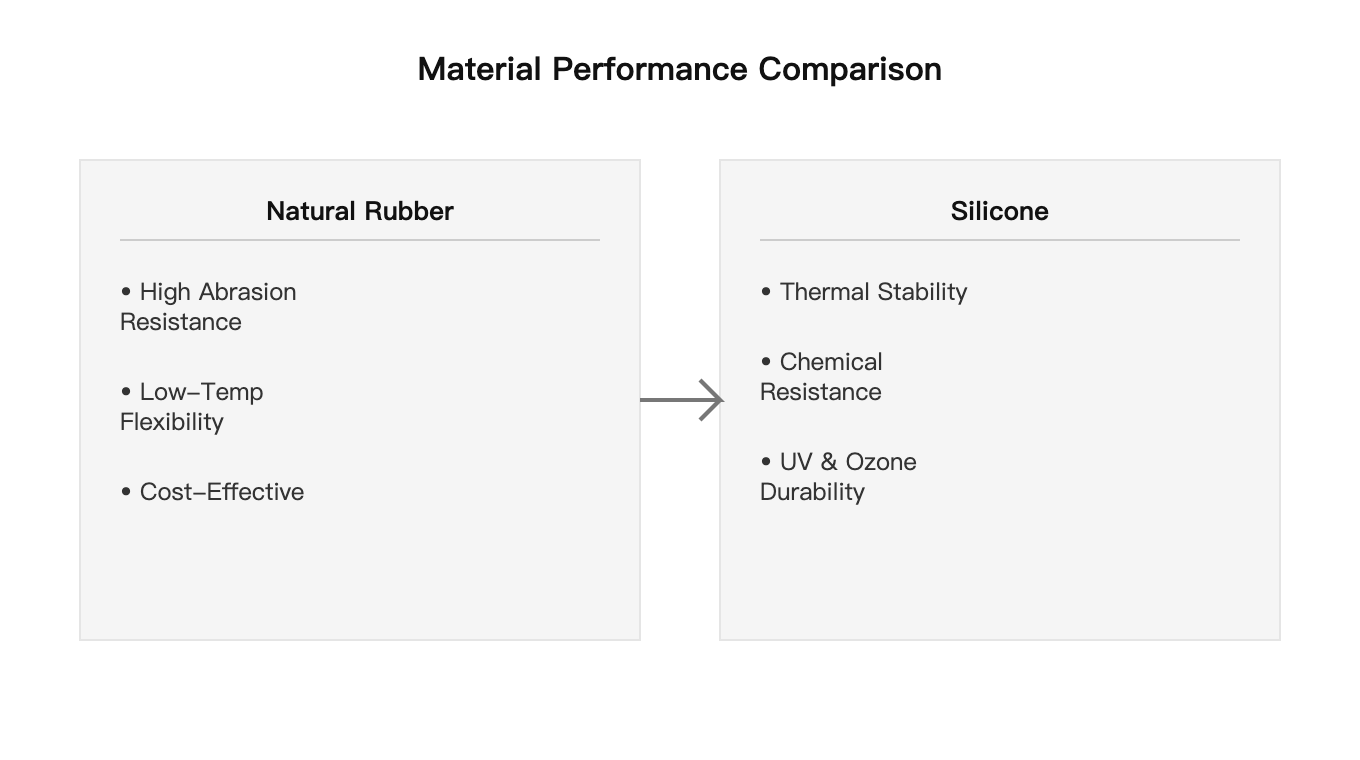
A comparison of performance characteristics between natural rubber and silicone materials.
When to Select Silicone for Industrial Use
Silicone is the superior material when your component must endure harsh environmental conditions that would cause natural rubber to fail. Its chemical inertness makes it the industry standard for seals, gaskets, and tubing in sensitive environments.
- Thermal Stability: Silicone remains functional in extreme heat and cold, whereas natural rubber begins to lose its integrity at elevated temperatures.
- Chemical and Environmental Resistance: Silicone is highly resistant to oxidation, ozone, and UV radiation. It does not react easily with most chemicals, making it ideal for complex industrial processes.
- Biocompatibility and Purity: Because it is synthetic and non-reactive, silicone is the primary choice for applications where the part must remain stable without leaching additives into the surrounding environment.
Comparing Mechanical and Thermal Properties
The performance gap between these two materials is most evident when evaluating how they handle stress over time. Natural rubber offers a more pronounced elastic response, which is beneficial for sealing applications that require high compressibility. However, this comes at the cost of environmental longevity.
Silicone, while offering a slightly different elastic profile, provides consistent performance over a longer service life. In high-heat environments, silicone gaskets will maintain their shape and seal integrity, whereas natural rubber may harden or crack. This durability reduces the frequency of maintenance cycles and part replacements in industrial machinery.
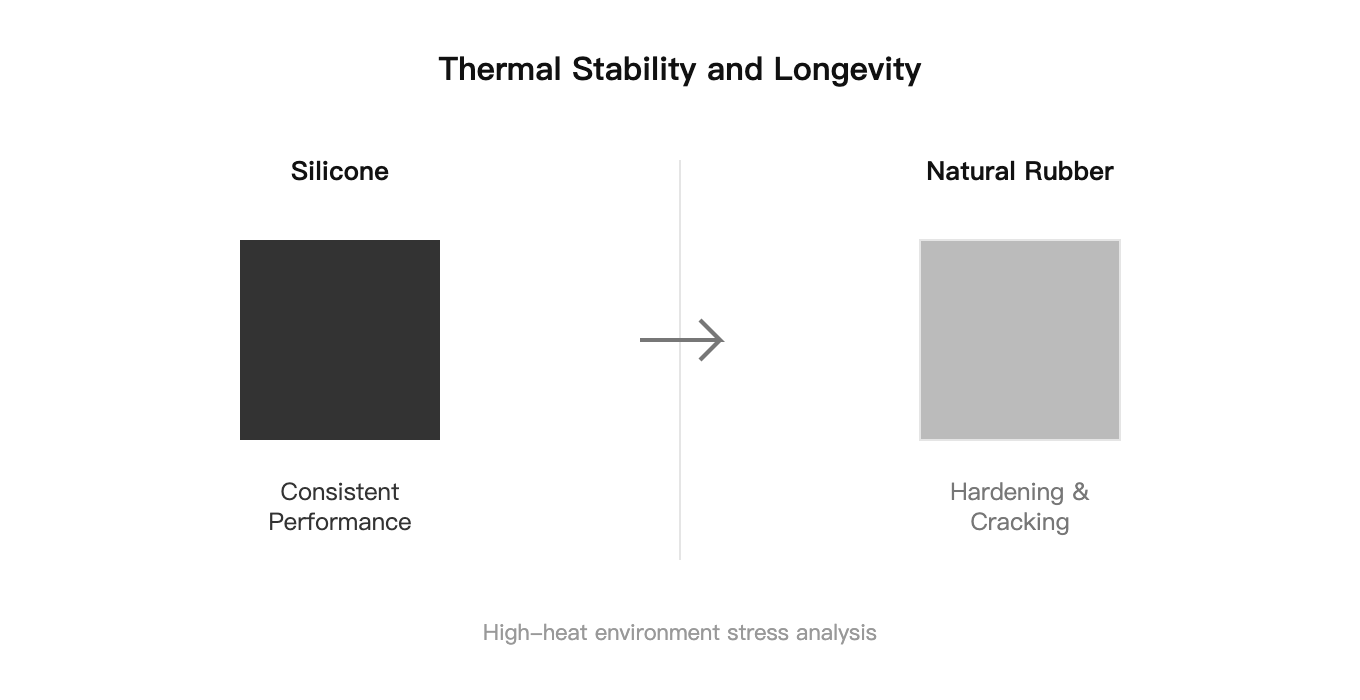
Comparison of material performance under high-heat stress between Silicone and Natural Rubber.
Guidelines for Material Selection
To determine which material is right for your project, evaluate the specific stressors your component will face. If your part is intended for indoor, low-stress mechanical use, natural rubber is often sufficient. If the part will be exposed to the elements, high heat, or chemical agents, silicone is the safer starting point.
For projects requiring high-precision components, such as LSR Injection Mold High-Temperature Resistant Lens Optical, the manufacturing process often favors silicone due to its ability to be molded into complex geometries with tight tolerances.
Procurement and Customization
InSilicone has been manufacturing silicone, rubber, and PVC products since 2010. We specialize in tailoring material properties to meet the specific requirements of the medical, automotive, and electronics industries.
Our factory in Dongguan City is equipped to handle complex molding and extrusion processes for both standard and custom parts. We provide free samples and design services to assist with your material selection and prototyping needs. Contact our team to discuss your project specifications or to request an RFQ for your next production run.