
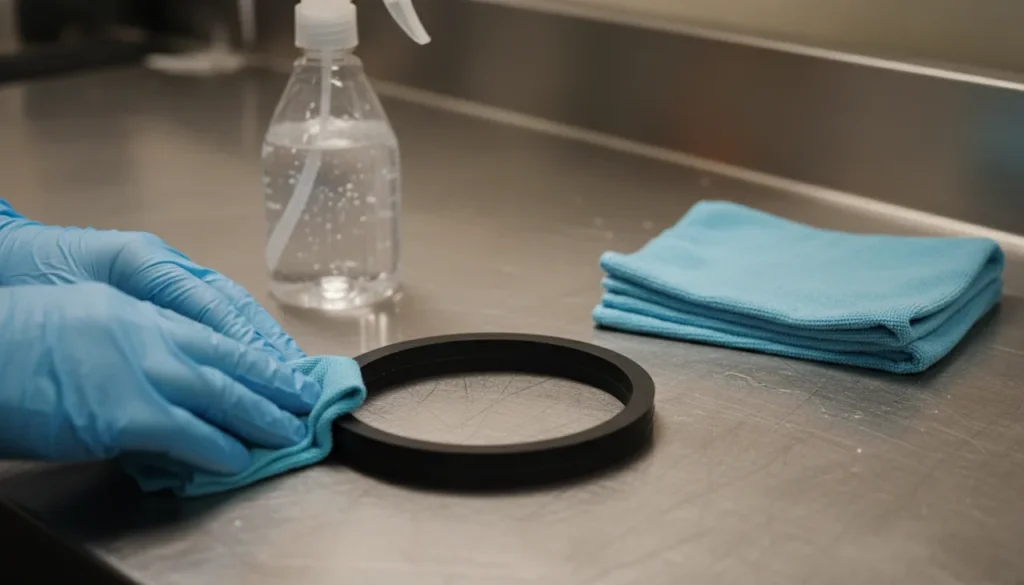
Silicone parts require specific cleaning protocols to maintain their physical integrity and chemical resistance. Use mild, pH-neutral detergents for routine maintenance and avoid abrasive scrubbers that can compromise the surface finish. If a component exhibits permanent tackiness, discoloration, or structural degradation, it should be replaced rather than cleaned.
How to degrease a silicone gasket
Industrial seals and gaskets often accumulate oils and lubricants during machinery operation. To effectively degrease these parts, submerge them in a solution of warm water and a high-quality degreasing dish soap.
Allow the parts to soak for 15 to 20 minutes to break down the oily film. Use a soft-bristled brush to gently agitate the surface, ensuring you reach into any grooves or sealing lips. Rinse thoroughly with clean water and allow the parts to air dry completely before reinstallation. Avoid using harsh solvents or petroleum-based cleaners, as these can cause the silicone to swell or lose its elasticity.
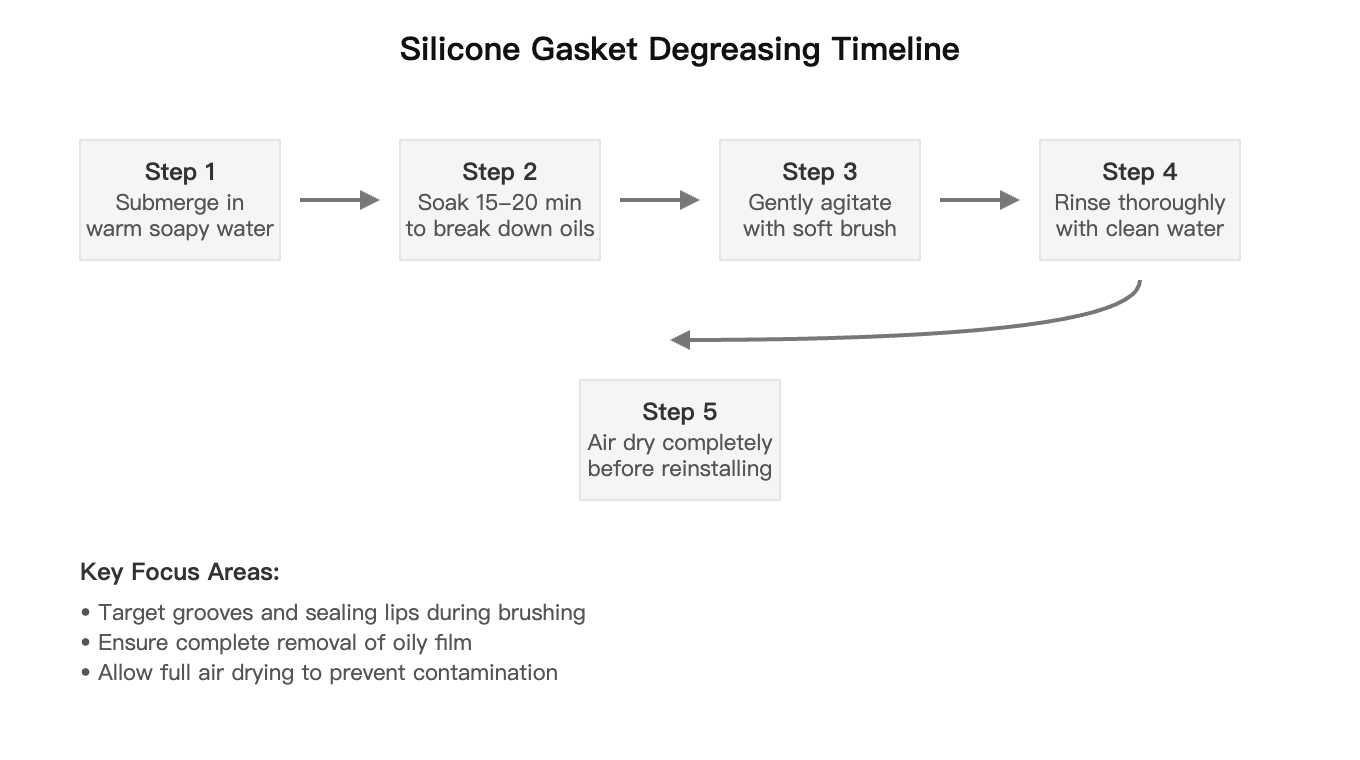
Five-step process for cleaning silicone gaskets from soaking to reinstallation
When tackiness means replace, not wash
Silicone is naturally resilient, but it is not immune to chemical breakdown. If a part becomes tacky or sticky, it is often a sign of polymer degradation, frequently caused by exposure to incompatible chemicals or extreme temperatures.
While a light film can sometimes be mitigated by a thorough wash with 70% rubbing alcohol, persistent tackiness indicates that the material’s cross-links are breaking down. In high-stakes environments like automotive or electronics assembly, attempting to “clean” a degrading part is a risk to system reliability. When the surface texture changes significantly, replace the component to ensure the seal or insulation remains effective.
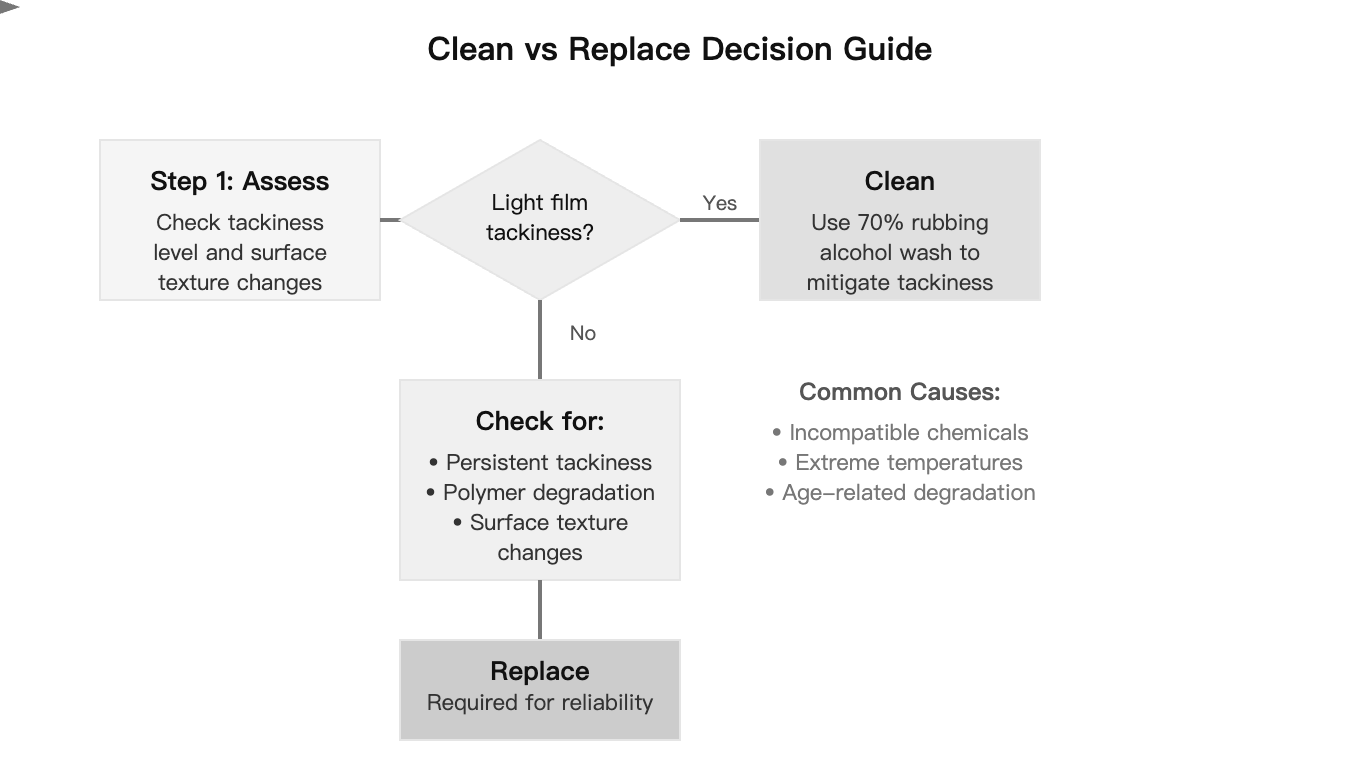
Decision matrix for tacky silicone parts based on severity and surface condition.
Maintaining silicone in electronics and insulation
Silicone components used in electronics, such as keypads or protective housings, require a delicate touch to avoid damaging sensitive internal connections. Dust and light debris can typically be removed using compressed air.
For more stubborn grime, use a lint-free cloth lightly dampened with isopropyl alcohol. Wipe the surface gently and ensure no liquid seeps into the underlying circuitry. Because silicone is non-conductive, it is an excellent choice for insulation, but moisture trapped during the cleaning process can cause short-term performance issues. Always verify that the cleaning agent is compatible with the specific grade of silicone used in your assembly.
Best practices for industrial silicone care
To ensure longevity, establish a regular maintenance schedule based on the operating environment of your parts. High-temperature environments or exposure to harsh chemicals will necessitate more frequent inspections.
- Avoid Abrasives: Never use steel wool, scouring pads, or metal scrapers, as these create micro-abrasions that harbor bacteria and weaken the material.
- Temperature Control: While many silicone grades are heat-resistant, avoid exceeding the manufacturer’s recommended temperature limits during cleaning processes.
- Proper Storage: Store spare silicone components in a cool, dry place away from direct sunlight and ozone sources, which can accelerate the aging process.
For more information on the material properties of your components, refer to our guide on The Advantages of Using Silicone Rubber in High-Temperature Environments. Proper care begins with understanding the specific grade of material utilized in your application.
If you are sourcing components for a new project or require assistance with material selection, our engineering team provides design services and can supply tailored samples to ensure your parts meet the exact specifications of your industry. Contact us to discuss your requirements or to request a quote for custom-manufactured silicone components.